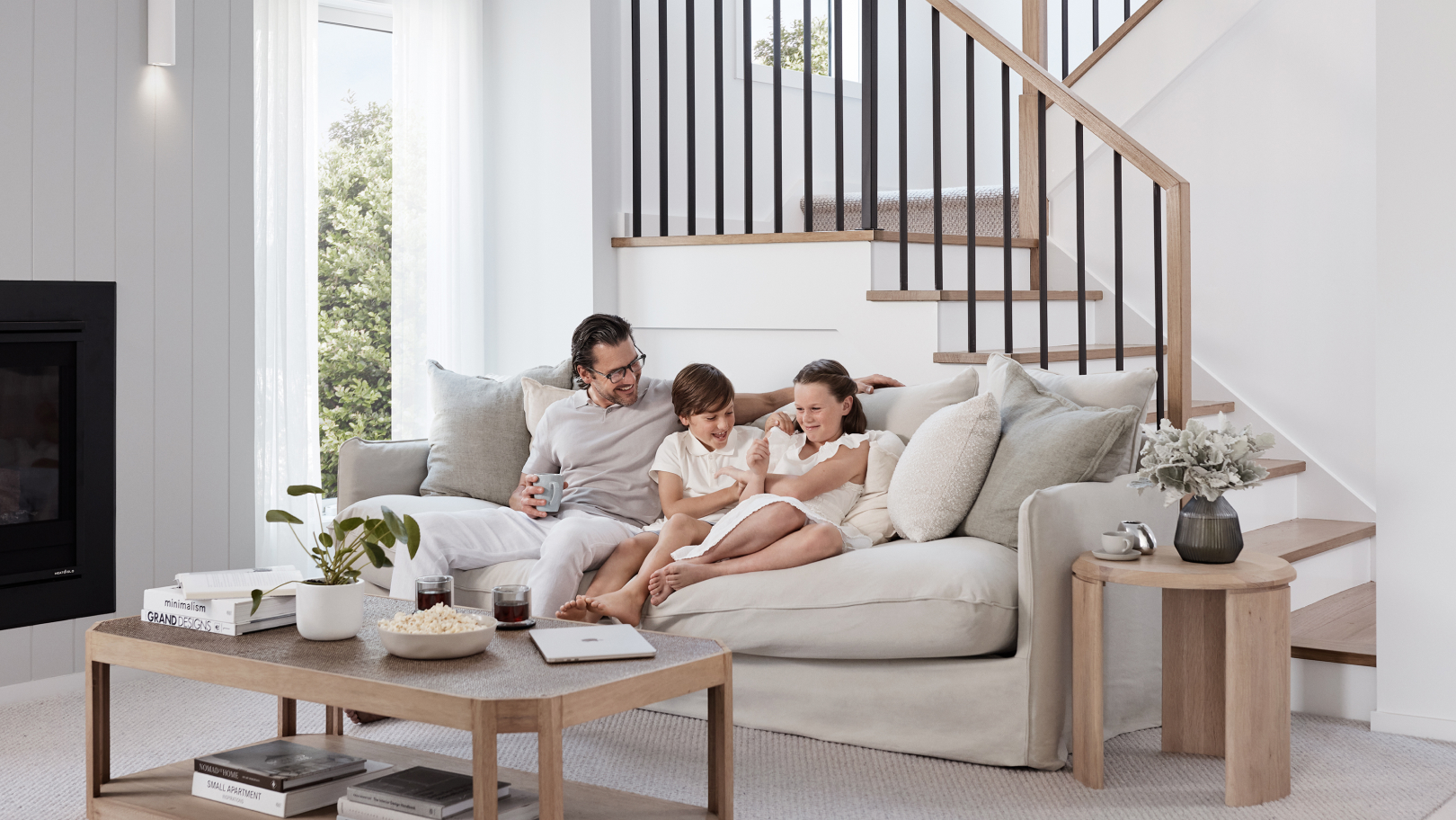
The gap between running an established home and running a new 7-star home is significant, and it shows up most painfully in winter. Here is what those numbers look like across one, five, and ten years, and why building well from the start pays off for decades.
Opening the winter quarterly bill is one of those small Melbourne rituals nobody enjoys. Heaters running longer, hot water working harder, a household trying to stay warm in a building that often was not designed for it. For most Victorians living in established homes, the gap between summer and winter bills is steep, and it shows up at the same time every year.
This article is about why that gap exists, and what changes when you build new today.
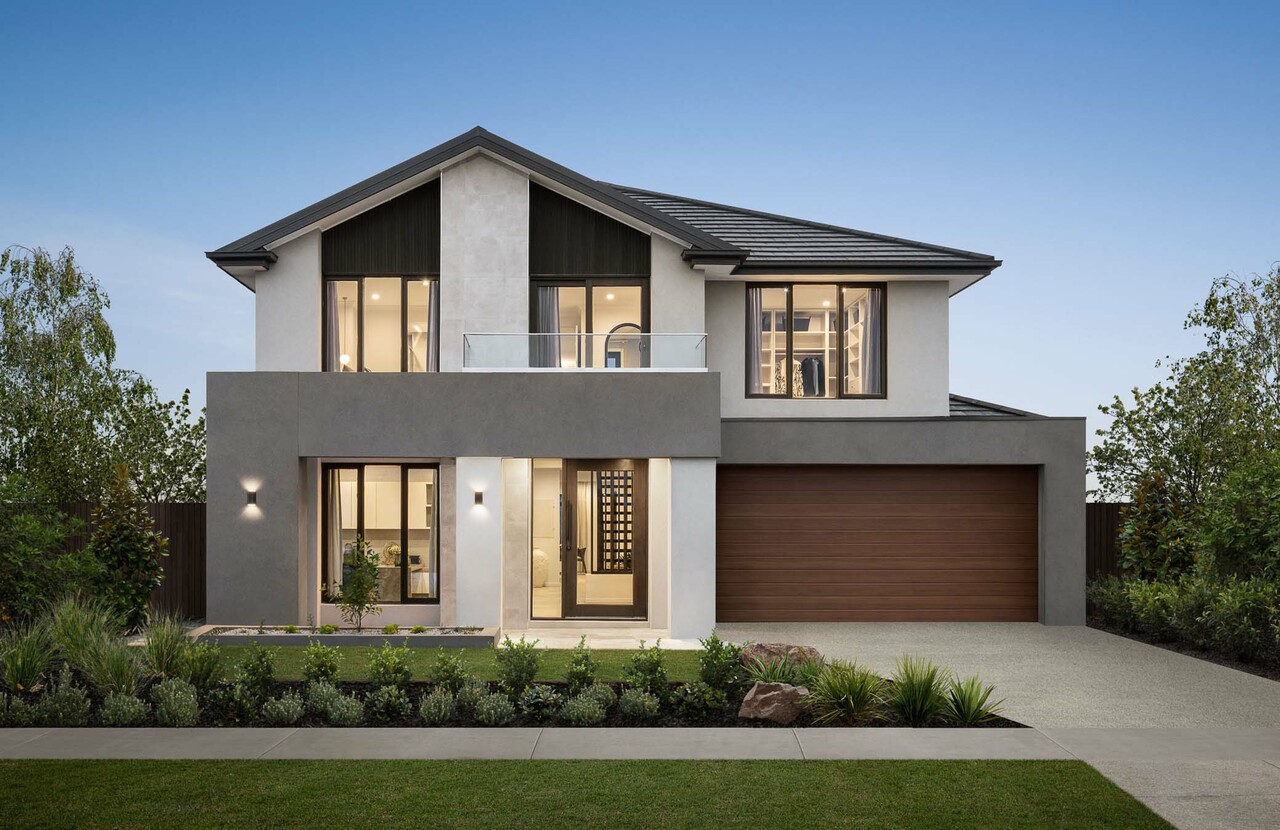
Reduce winter energy bills with a 7-star energy-efficient home, where Carlisle’s Hebel facades and modern construction help deliver year-round comfort and long-term savings.
A quick word on stars
Every new home in Australia gets a star rating between 0 and 10 under the Nationwide House Energy Rating Scheme, known as NatHERS. The rating measures how much energy a home needs to keep its occupants comfortable, factoring in local climate, orientation, wall and ceiling materials, and the windows that let heat in or out. Higher stars mean less energy required.
From May 2024, every new home built in Victoria must achieve a minimum of 7 stars. Before that, the minimum was 6. Before 2010 it was 5. Before 2003 there was effectively no national standard at all.
Australia’s existing housing stock, the millions of homes already lived in, averages below 2 stars in energy performance, with the CSIRO finding that the average pre‑standards home sits around 1.5 stars. The gap between a brand-new home built today and a typical established home built before 2003 sits at around five stars.
What that gap means in dollars
Sustainability Victoria’s modelling shows a 6‑star Melbourne home uses roughly 30 per cent of the heating energy of a pre‑2005 home of the same size. A 7‑star home uses around 20 to 25 per cent less again. Taken together, and a new 7‑star home in Melbourne can use up to three quarters less heating energy than the older home next door.
Independent analysis by Renew, in their Households Better Off report, puts annual energy bill savings for a new all‑electric 7‑star home in Melbourne at $1,056 per year compared with a recent dual‑fuel 6‑star home. Compared with a much older established home, the saving is materially larger.
The Victorian Government estimates that a new all‑electric home with solar can save up to $1,920 a year on energy bills. Even without solar, an all‑electric new home saves around $990 a year compared with one running on gas.
Using Renew’s conservative $1,056 figure, here is what those savings compound to:
| Time period | Estimated savings vs an older established home |
| 1 year | $1,056 or more |
| 5 years | $5,280 or more |
| 10 years | $10,560 or more |
These figures use Renew's $1,056 a year as a conservative floor, comparing a new 7-star all-electric home with a recent 6-star home. Stack the same comparison against an older established home built before national energy standards existed, and the annual saving is materially larger again.
The figures also do not include energy price rises, which would widen the gap further over time. It’s worth noting that Victorian electricity prices rose under the 2025-26 Default Offer set by the Essential Services Commission, and could rise again in the future. The longer you live in a well-built home, the more that rising tide works in your favour.
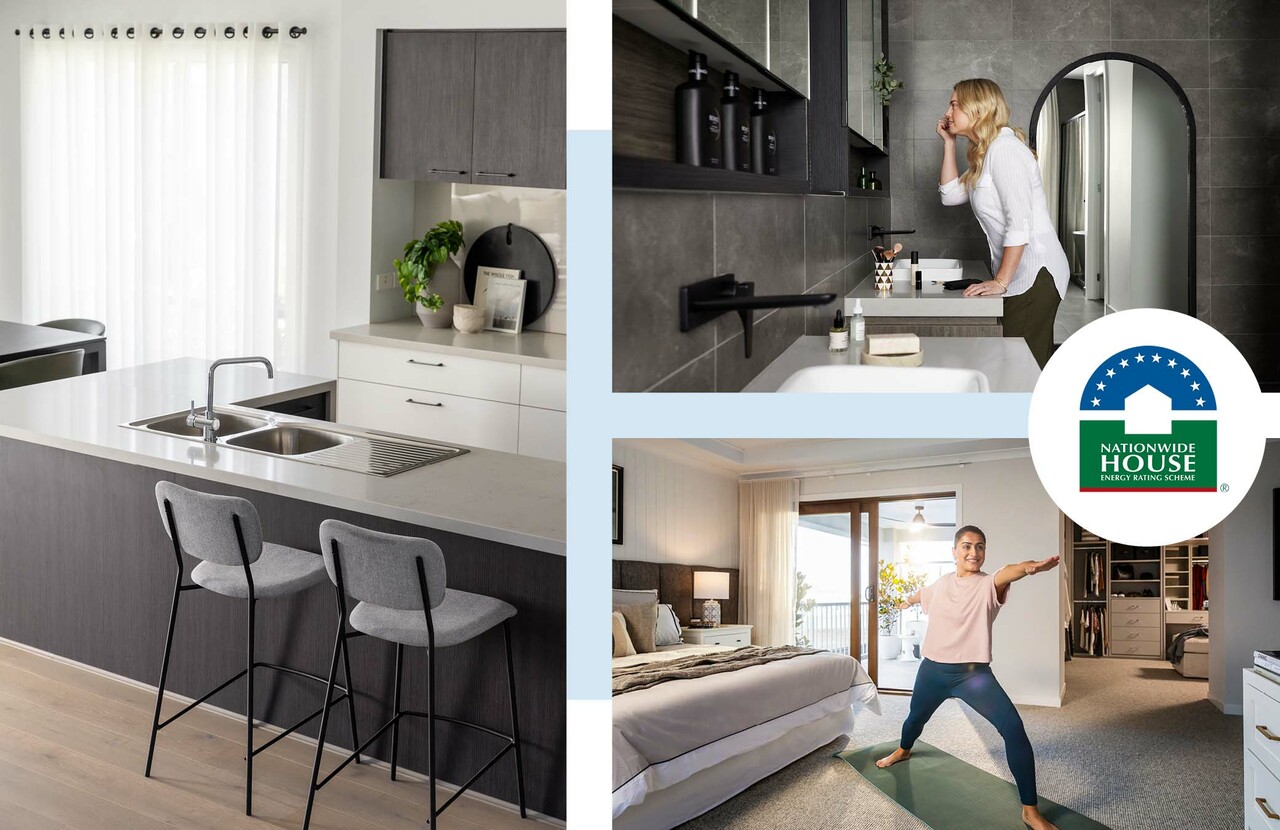
A 7-star energy-rated home can significantly reduce heating demand and deliver long-term savings, with lower energy bills compounding year after year compared to older homes.
What 7 stars actually buys you
A 7‑star rating is the outcome of a series of design decisions, working together.
High‑performance glazing slows heat loss in winter and heat gain in summer. Improved ceiling and wall insulation holds temperature inside the building shell. Tighter construction practices reduce the draughts and air leakage that quietly drain warmth from older homes. Better orientation (where the block allows), lets winter sun do free work for you. Efficient electric appliances for heating, cooling, and hot water complete the picture, and rooftop solar turns the daytime hours into bill credits.
The combination is what makes a 7‑star home feel different to live in. The bill saving follows from the comfort.
A designer’s view
“The thing people notice first in our 7‑star homes is the way temperature holds. You warm the home in the morning and that warmth stays through the day. The bedrooms are not dramatically colder than the lounge. It’s the kind of comfort that is almost invisible until you have lived in a home that’s more climate comfortable with lower effort, and you’ll never go back.”
Bob Bobbins, Senior Designer, Carlisle Homes
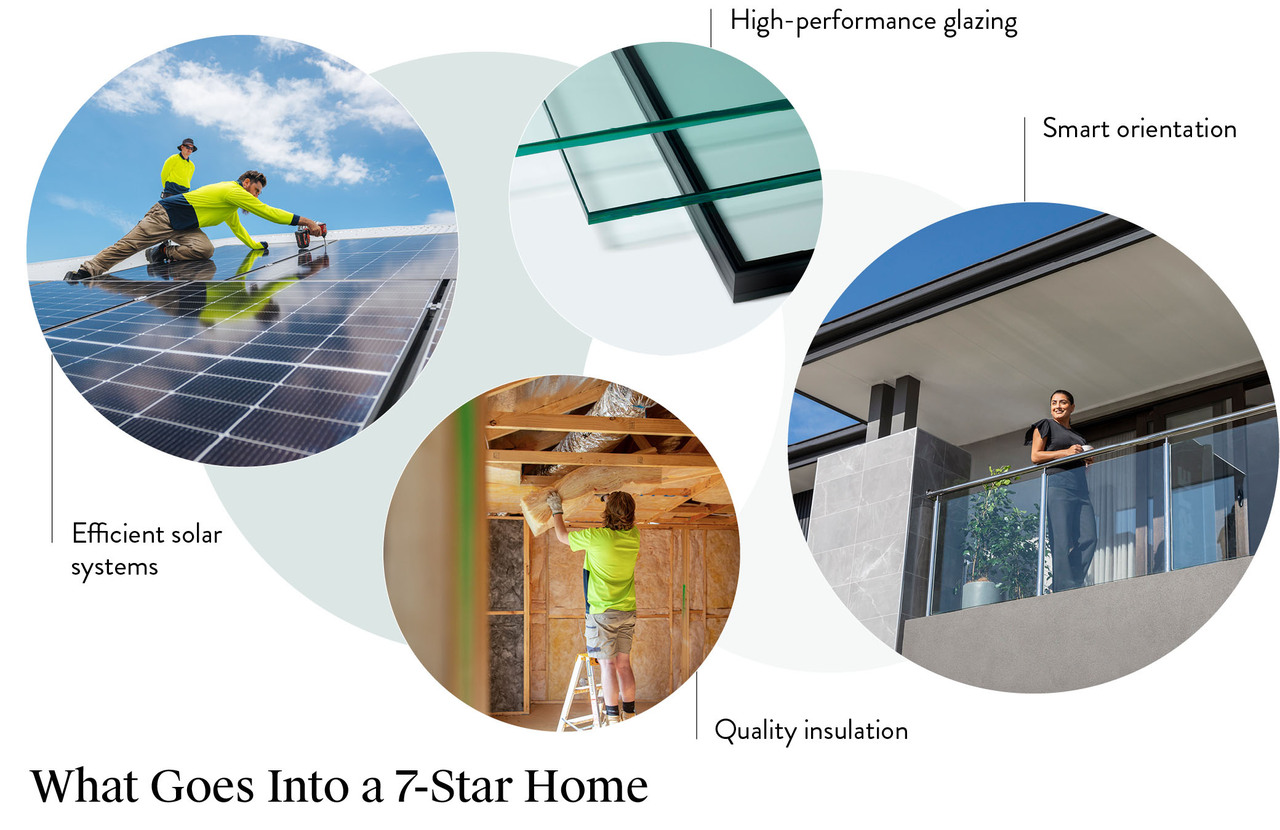
A 7-star home combines smart design, insulation, glazing and efficient systems to deliver year-round comfort, lower energy use and a noticeably better living experience.
The longer view
A home is one of the longest‑lived purchases most of us will ever make. The decisions made when it is built, including orientation, insulation, glazing, and appliance choices, set its running cost for decades. Retrofitting an established home to anything close to 7‑star performance is possible, albeit expensive, disruptive, and constrained by the bones of what’s already there. Building well from the start is meaningfully cheaper than upgrading later.
For first home buyers and growing families weighing up a renovated established home against a new build, running cost is often the line item missing from the comparison. A new home with a higher purchase price can quietly out‑perform a cheaper established home over a 10‑year hold once the bills are added in.
A useful place to start
Every Carlisle home, including our Knockdown Rebuild designs, are built to a minimum 7‑star standard, with solar included. Our designers can walk you through what that means in your specific floor plan, on your specific block, with your specific household. If you are weighing up a build against an established home, that conversation is a good place to begin.