
Star ratings, solar readiness, all-electric, insulation. These terms often come up when you're comparing a new build to an established home, but what do they actually translate to on your power bill? Here's the jargon stripped back, with real numbers attached.
When you're weighing up a new build against an established home, the conversation tends to focus on purchase price, location, and how much work the older place needs. Energy efficiency rarely gets the attention it deserves, even though it's one of the few costs that compounds every single quarter for as long as you live there.
The terms can sound abstract until you connect them to a power bill. Here's what they look like in practice.
Star ratings: the home's report card for comfort
Every new home built in Victoria is assessed under the Nationwide House Energy Rating Scheme, or NatHERS, which gives it a star rating out of ten. The rating reflects how much energy the home will need to stay comfortable across the year, based on its insulation, glazing, orientation and design.
Since May 2024, the minimum standard for new Victorian homes is 7 stars. According to Sustainability Victoria, a 7-star home needs around 30 per cent less energy for heating and cooling than a 6-star home, and other independent assessments put the saving at roughly 20 to 25 per cent less energy for heating and cooling compared with a 6-star home.
Here's where it gets relevant to established homes. Many older Victorian houses, particularly those built before the 2000s, sit well below even the old 6-star minimum, often in the 1 to 3 star range. That gap is often the difference between a house that needs to work hard to stay liveable and one that does most of the work for you, passively, through design.
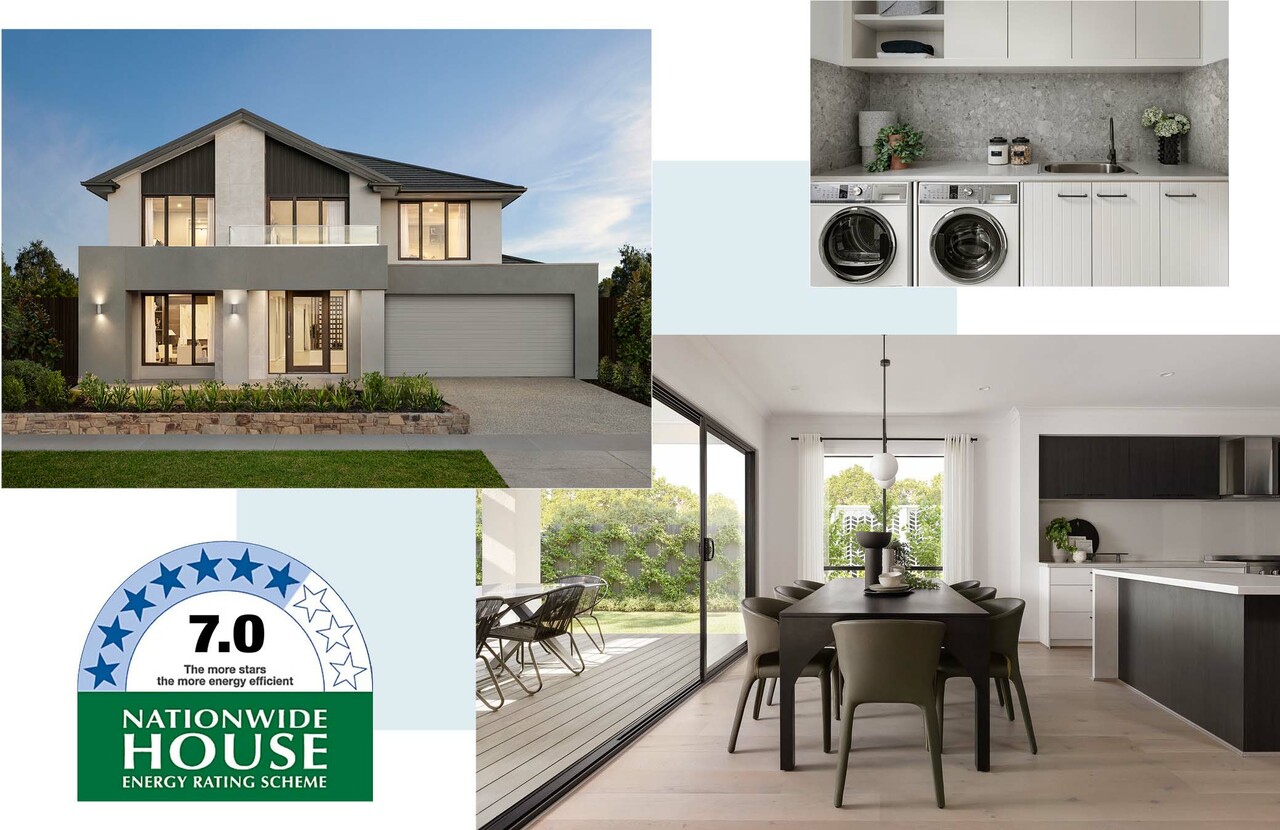
Designed to achieve a minimum 7-star NatHERS rating, Carlisle homes use up to 30 per cent less energy for heating and cooling.
What this looks like in dollars
Analysis by sustainability advocate Renew shows that savings could reach $1,056 per year for an all-electric home in Melbourne, with slightly less for a home running on a mix of gas and electricity.
And while building to 7 stars adds some cost upfront, largely through better insulation, improved glazing and the shift from gas to all-electric systems, the same analysis found that for an all-electric home, that additional cost is typically recovered within four to five years through lower bills. After that, it's pure saving, for as long as you own the home.
Compare that to an established home that's never been upgraded. There's no payback period to wait out, because there was never an upfront investment in efficiency. There's just the ongoing cost of a house that loses heat in winter and gains it in summer, every year, with the expensive bills to match.
All-electric: removing a second set of bills
“All-electric” simply means the home runs on electricity for everything: cooking, hot water, heating and cooling, with no gas connection at all. For new homeowners, this matters for a few practical reasons.
First, it removes the fixed daily supply charge that comes with a gas connection, a cost you pay whether you use any gas or not. Second, modern electric systems, particularly reverse-cycle heating and cooling and heat pump hot water units, are significantly more efficient than the gas appliances they replace. Third, an all-electric home pairs naturally with solar, because everything you run can potentially be powered by what your roof generates.
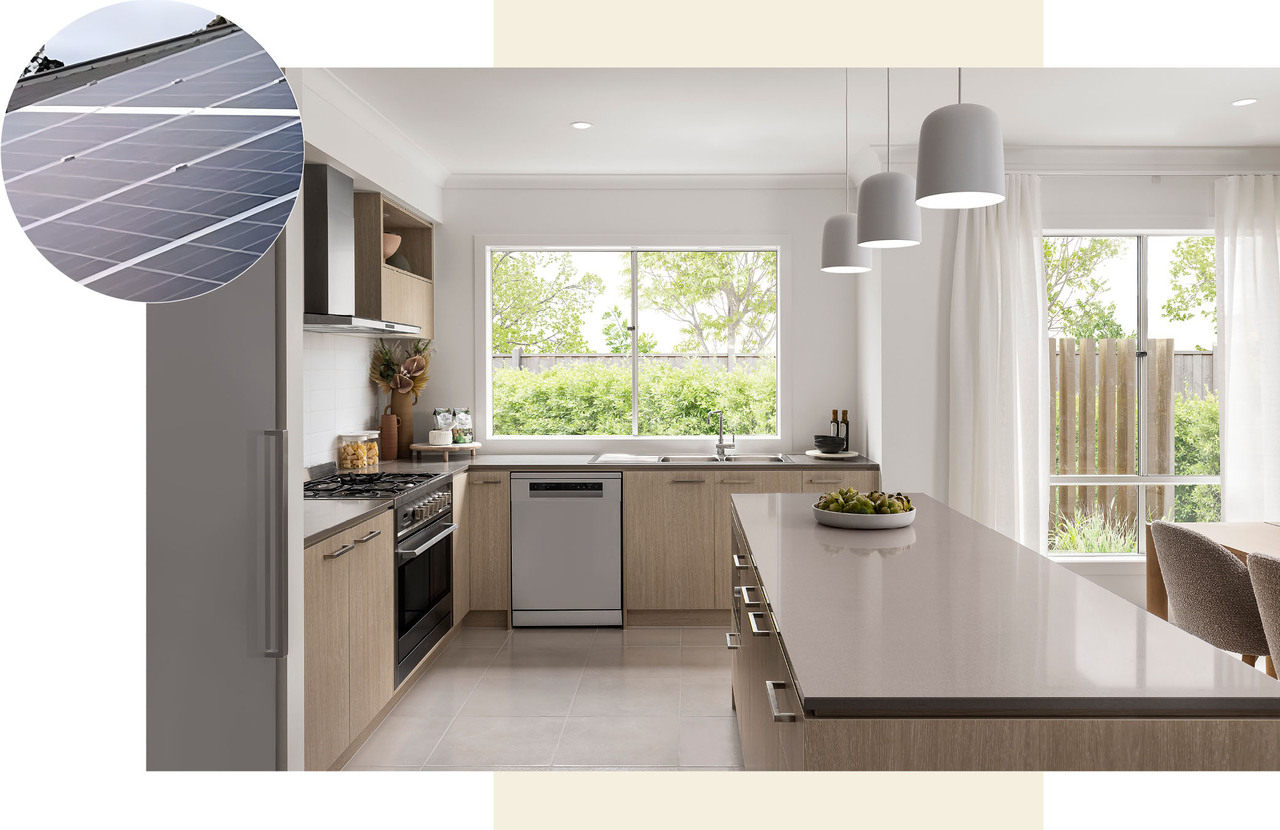
All-electric Carlisle homes eliminate gas supply charges and pair naturally with solar, reducing running costs from day one.
Solar readiness: savings that keep adding up
Under the new Whole-of-Home requirements introduced alongside the 7-star standard, new homes are assessed not just on how well they hold their temperature, but on the total energy their fixed appliances will use across the year, with the option to offset that usage through rooftop solar and battery storage.
This is where the savings start to add up. A well-insulated, all-electric home already uses less energy than an older equivalent. Add solar, and a meaningful portion of that reduced usage can be generated on-site rather than purchased from the grid.
Double glazing: closing the biggest energy gap
The average home loses up to 40 per cent of its heating and cooling through low-performance windows, which makes glazing one of the biggest single factors in how hard your heating and cooling system has to work.
In a 7-star Carlisle home, all windows and some sliding external doors are double-glazed as standard. Double glazing works by trapping a layer of air or gas between two panes of glass, which slows the transfer of heat through the window.
Retrofitting double glazing into an existing home means replacing the window units entirely, which is one of the more expensive and disruptive upgrades a homeowner can take on. In a new build, it's part of the specification from the start.
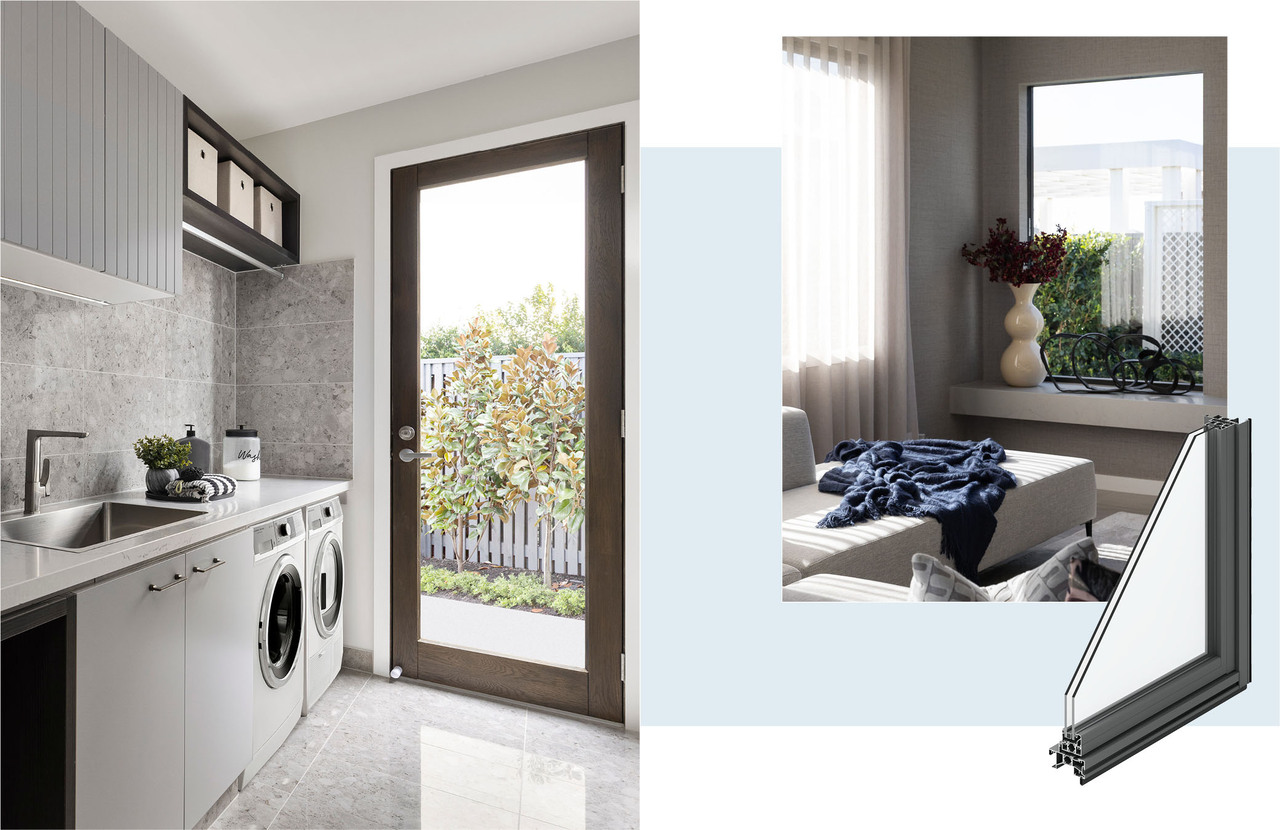
Double-glazed windows are standard in every 7-star Carlisle home, reducing heat loss by up to 40 per cent compared to single-glazed established homes.
Insulation: the quiet, permanent upgrade
Insulation plays a crucial role in keeping the temperature you've paid for inside the house, rather than leaking it into the roof cavity or through the walls.
In an older established home, insulation is often degraded and not up to current standards. Upgrading after the fact means accessing wall cavities and roof spaces, which is disruptive and can be messy and expensive. In a new Carlisle home built to current standards, premium ceiling and wall insulation is part of the build from day one.
The bigger picture: comfort, cost, and resale
The cumulative effect of star ratings, all-electric design, solar readiness, double glazing, and proper insulation isn't just a lower power bill, though that's the part you'll notice first. It's a home that's more comfortable to live in day to day, with fewer cold corners in winter and fewer rooms you avoid in summer.
It also affects what the home is worth when you come to sell. As energy efficiency becomes a standard expectation rather than a bonus, homes that were built to meet it will compare favourably against established homes that doesn't, and won't, without significant investment from whoever buys it next.
We've looked at how these running costs stack up directly in What it actually costs to run a new home compared to an established one, and gone deeper on the regulatory side in The government's new 7-star rating: what it means, if you'd like to read further.
See it for yourself
Discover how Carlisle's award-winning floorplans make your home cheaper and more efficient to run, and kinder on the environment, by making time to visit one of Carlisle's 80+ display homes conveniently located right across Melbourne.
This content is general in nature and is not financial advice. Carlisle Homes does not provide financial or lending advice. Please seek independent advice relevant to your circumstances.