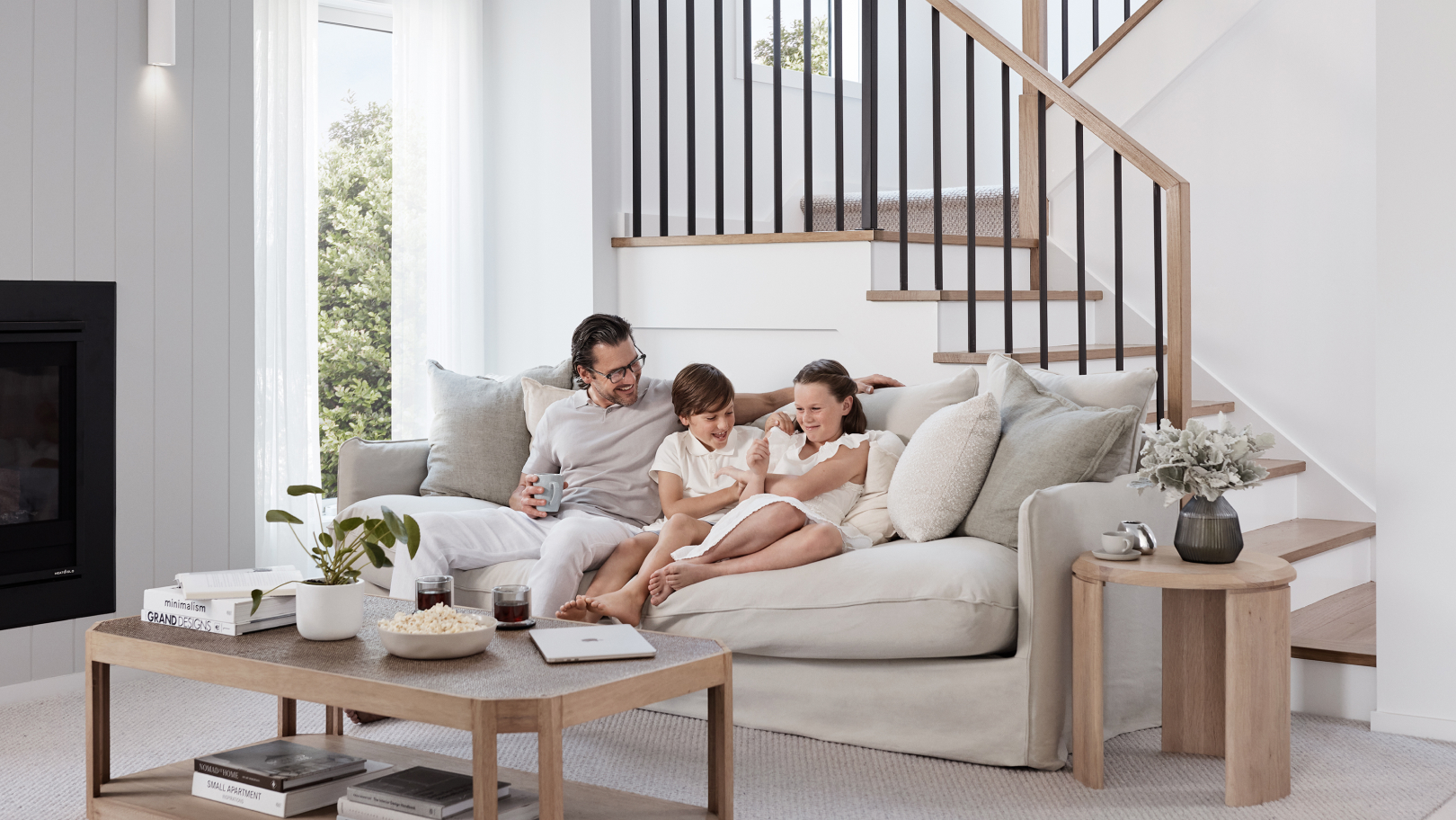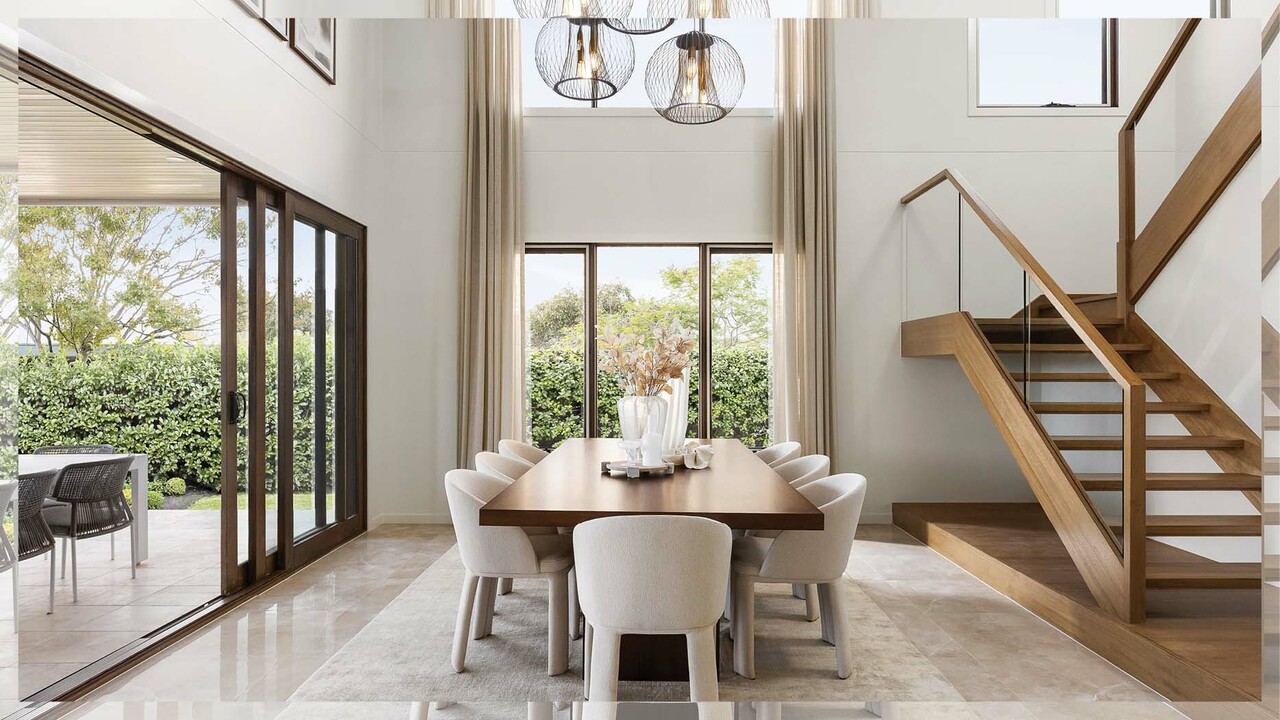
Most people assume you have to choose between a home filled with natural light and one that’s energy efficient. In reality, advances in modern glazing mean you can enjoy both, and the proof is in four Carlisle homes worth seeing for yourself.
Ask someone what comes to mind when they hear “energy-efficient home” and they’ll probably mention insulation, solar panels or a heat pump tucked discreetly out the back. Windows rarely make the list. In fact, many people still assume that larger windows automatically mean a less efficient home.
It was once a fair assumption, but modern glazing has changed the equation. Today, it’s not simply the size of your windows that matters, but the quality of the glazing, how the windows are oriented and how they work as part of the home’s overall design. Get that right, and a north-facing wall of glass can contribute more to your home’s year-round comfort and energy performance than a series of smaller, less thoughtfully positioned windows ever could. You no longer have to choose between a bright, light-filled home and one that performs exceptionally well. With thoughtful design, you can have both.
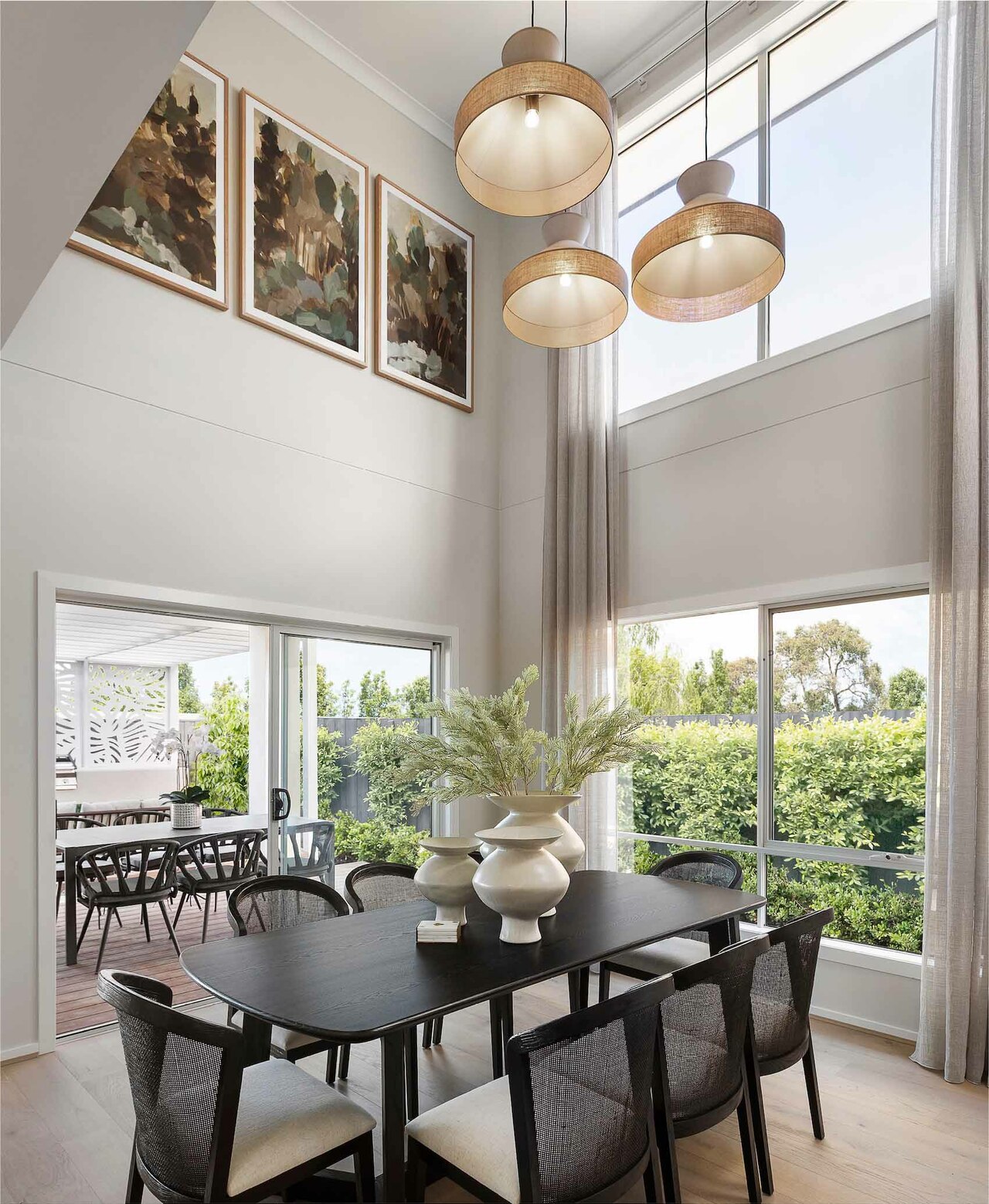
New Carlisle homes in Melbourne prove light and performance aren’t a trade-off, as seen in our Illawarra Grand Atrium at Riverfield Display Centre.
The biggest myth about energy-efficient homes
In established homes, the idea that big windows waste energy is largely true. Single-pane glass is a poor insulator. It lets heat pour out in winter and pour in during summer, which is why older Melbourne homes with generous windows often run cold in July and stuffy in February, no matter how hard the heating or cooling works.
But the glass that goes into a new Carlisle home today bears almost no resemblance to what was standard even fifteen years ago. Double glazing, low-E coatings, and thermally broken frames have changed the physics of a window altogether. The old trade-off between maximising natural light and maintaining energy efficiency is no longer the compromise it once was.
Carlisle's long-standing window partner, A&L Windows, has spent over two decades developing exactly this kind of product.
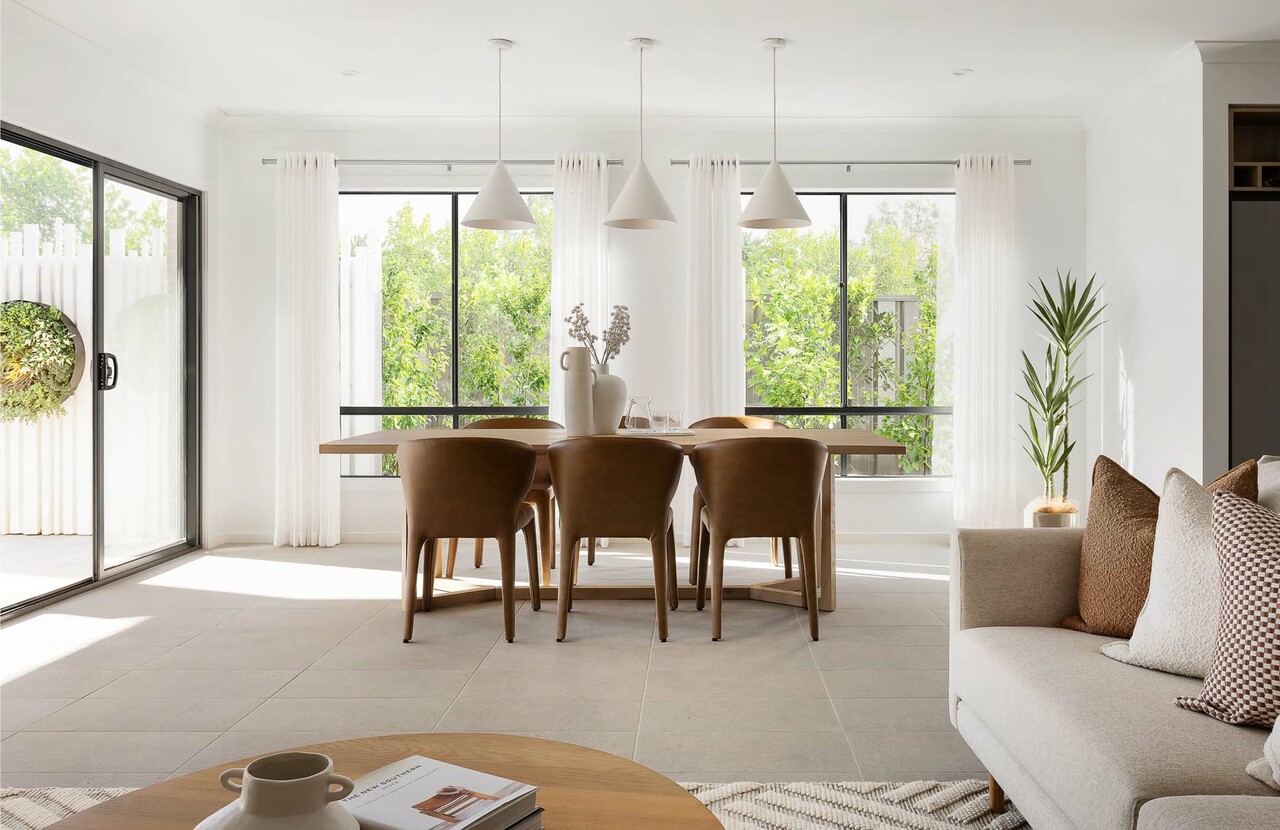
New Carlisle homes in Melbourne use double glazing, low-E coatings and thermally broken frames, developed with long-term partner A&L, to deliver real energy performance without sacrificing natural light.
Why windows are critical to a 7-star home
Every new home built in Australia has to meet a minimum 7-star NatHERS energy rating, a measure of how much energy a home needs to keep its occupants comfortable through the full run of Victorian seasons.
Double glazing creates an insulating pocket of air or gas between two panes, slowing the rate at which heat moves through the glass. Low-E coatings, a near-invisible metallic layer applied to the glass, reflect heat back into the room in winter and out of the room in summer, without dimming the amount of visible light that gets through. Thermally broken frames go a step further again, interrupting the path that heat would otherwise travel through the aluminium itself.
Solar heat gain and orientation matter just as much as the glass. A north-facing window, positioned with the right eaves or shading, lets in low winter sun while shading out the harsher overhead summer sun.
This is where the more than two-decade partnership between Carlisle and A&L does the real work. A shared research and development effort means that A&L's window engineers and Carlisle's designers solve the same problem together: how to keep delivering the big windows and indoor-outdoor living that Australian buyers want, without the thermal penalty that used to come with it.
The result is the combined product of windows, insulation, orientation, and construction method all working as a single integrated system. We recently explored this whole-of-home thinking in more depth in our article on energy-efficient homes built for Melbourne winters, and the same logic applies in reverse for summer.
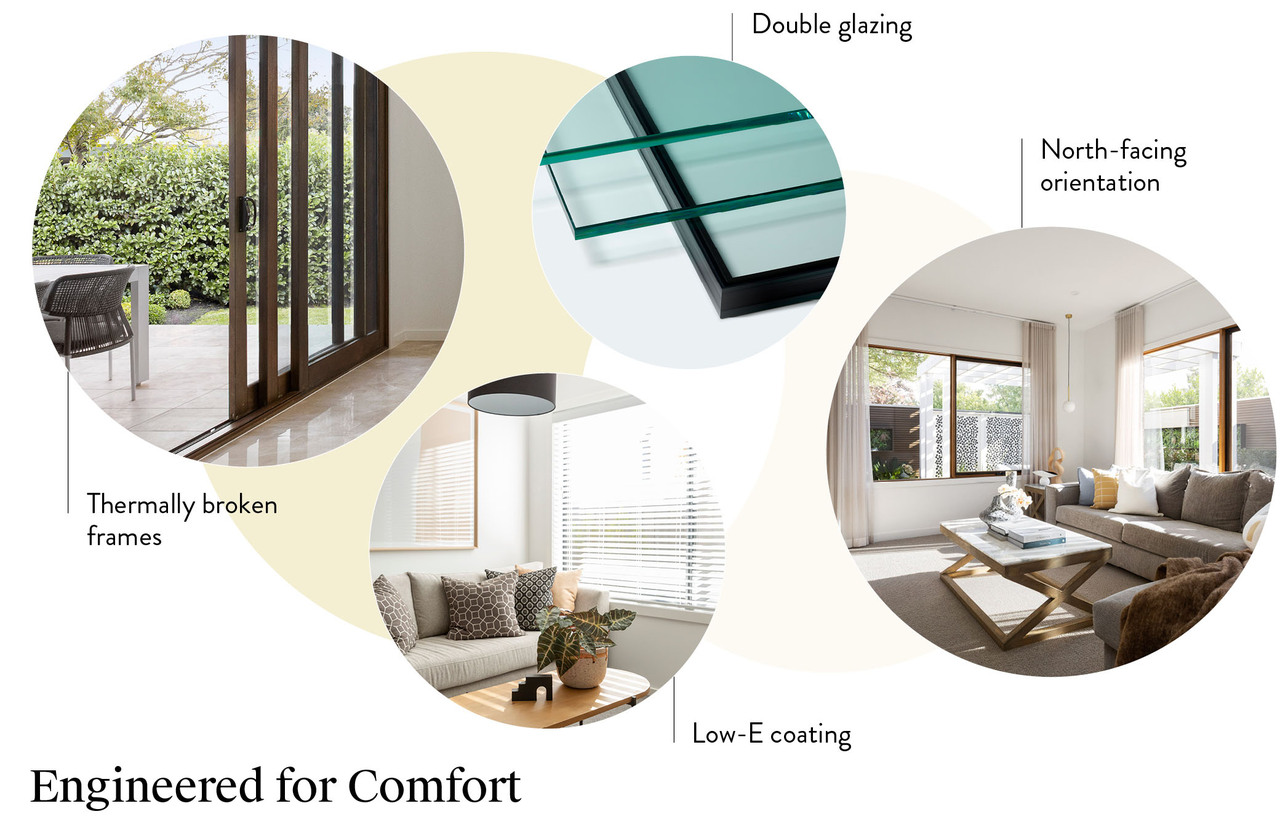
New Carlisle homes in Melbourne meet 7-star NatHERS ratings through double glazing, low-E coatings, thermally broken frames and smart orientation, working together for genuine year-round comfort.
Designing homes that capture light without losing comfort
Once you stop thinking of windows as a compromise, a different kind of home design opens up. Atriums and void spaces pull daylight deep into the floorplan, lighting rooms that would otherwise rely on downlights through the middle of the day. Large feature windows in the right spot stop being a compromise and start being the thing that makes a street frontage memorable.
There's a comfort dividend here too, and it's one most people only notice once they're living with it: a well-glazed, well-oriented home holds its temperature. The living room you warmed in the morning is still warm in the afternoon. The reliance on heating and cooling drops because the building itself is doing more of the work.
The connection to the outdoors matters for reasons that go beyond thermal performance, too. A kitchen that opens visually onto a garden or a living room that expansively frames a view change how a home feels to be in day to day.
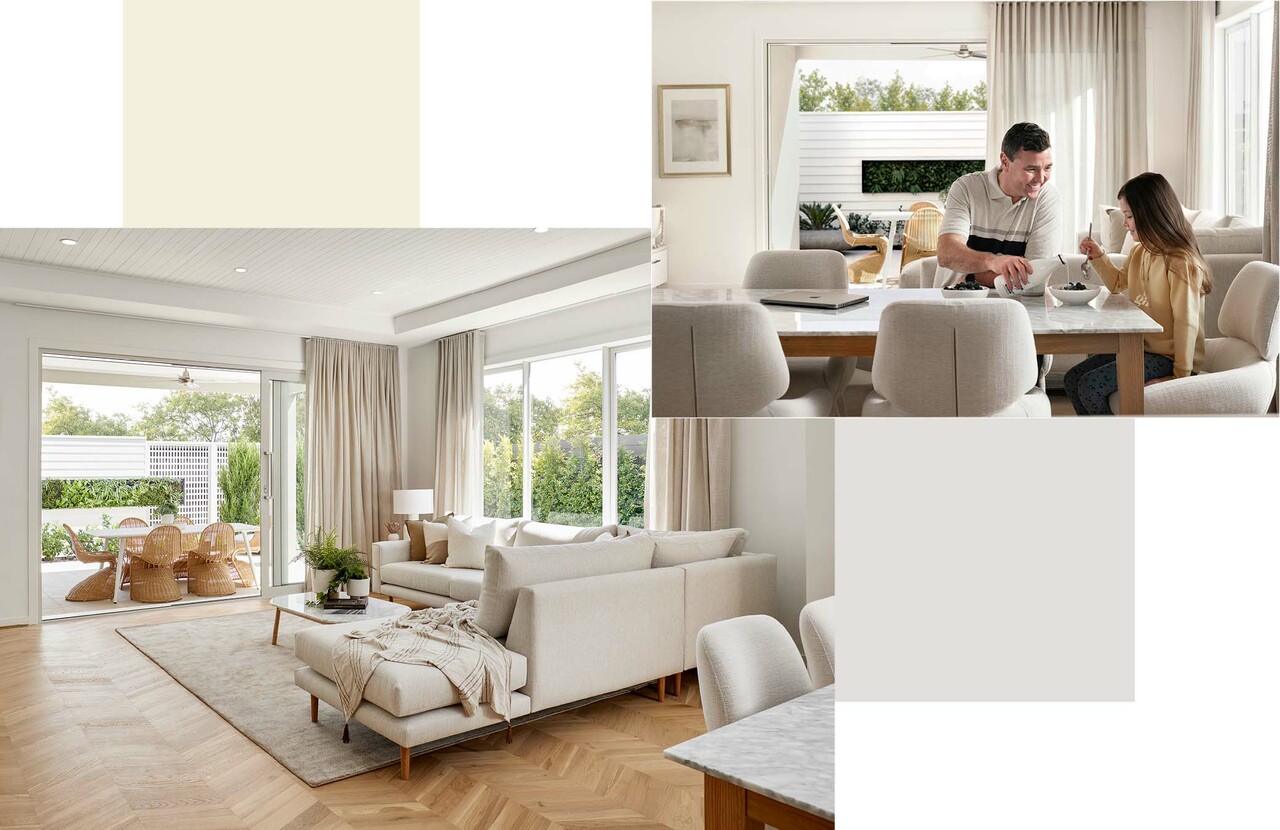
Create a light-filled Carlisle home in Melbourne where well-orientated windows hold their temperature through the day, framing a genuine connection to the garden and outdoors, as seen in our Rothwell at Aurora DV2 Display Centre.
Seeing it in person
The best way to understand how different a home with intelligently designed windows and placement feels, is to walk through one built that way. At Ridgelea Estate in Pakenham East, the Illawarra Grand Theatre Atrium 44 shows how well-proportioned windows can carry a larger family home, creating a welcoming street presence while pulling natural light through the interior. A few doors down, the Ashbourne Grand Pantry 23 makes the opposite case just as convincingly: a more compact single-storey footprint, elevated through considered window placement rather than sheer scale.
At Riverfield Estate in Clyde, the scale shifts. The Rothbury Grand Master Atrium 52, in the Bromley facade, uses expansive glazing to make an architectural statement, with large window openings that reinforce the home's sense of scale and presence. The Astoria Grand Living Atrium 58, in the Brooklyn facade, takes a bolder, more contemporary approach again, with floor-to-ceiling glass creating real visual drama.
The common thread across all these homes is that their aesthetic appeal and lived experience is defined by their windows as much as any other design decision.
Carlisle Homes designs every home to meet or exceed Victoria's 7-star energy standard, working closely with long-term partner A&L Windows to specify glazing systems that support architectural appeal and genuine thermal performance. Explore our display homes at Ridgelea Estate and Riverfield Estate to see it for yourself.